

Unlock Savings — 10% Off On First Invoice

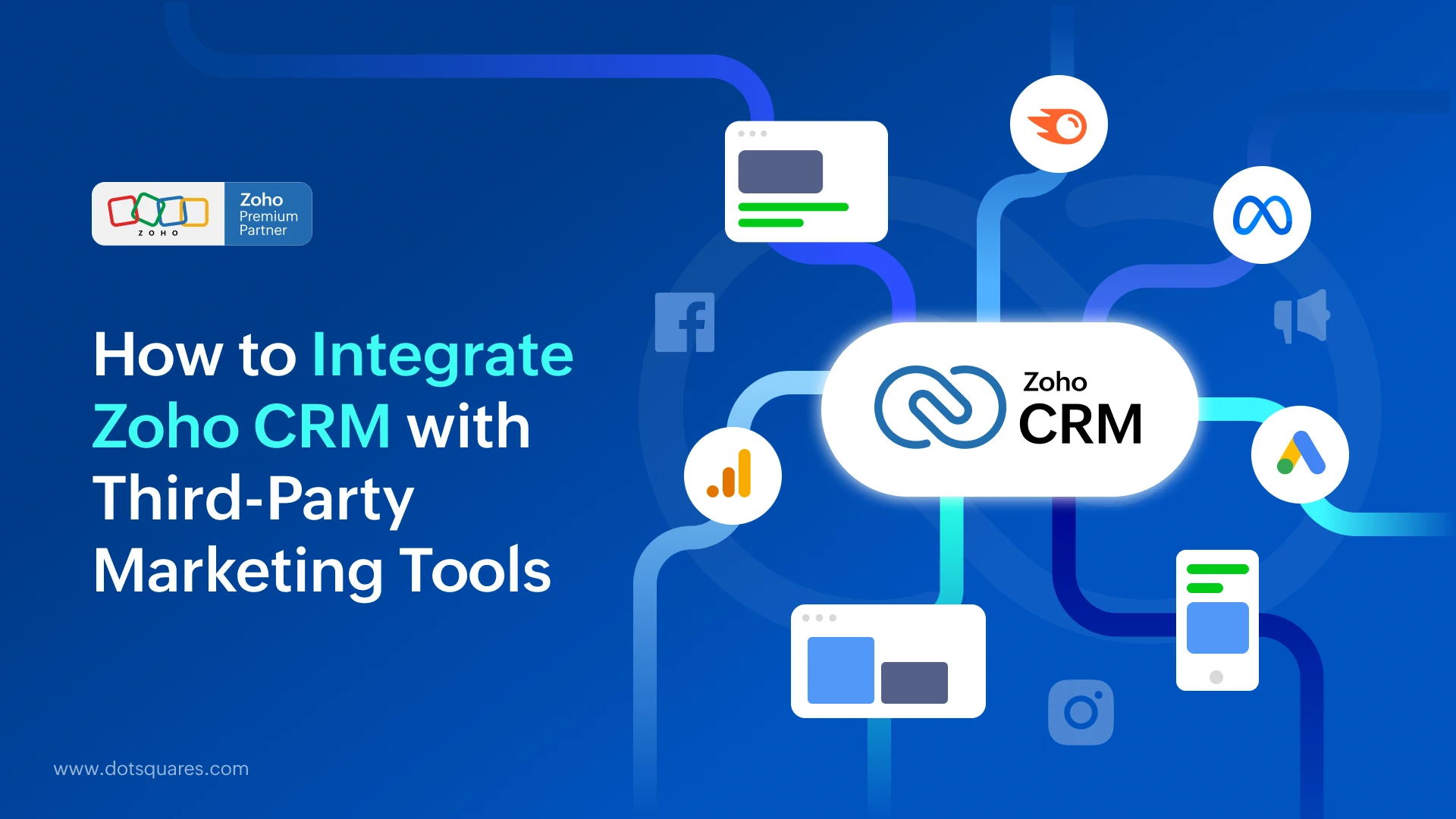
Are you using a patchwork of different tools for your marketing efforts? One platform for your email campaigns, another for social media scheduling, and a third for your landing pages? It’s a common scenario, and while each tool might be great on its own, it can lead to a bigger problem: siloed data.
When your marketing data lives in separate systems, you can’t get a clear, holistic view of your customer. You lose the context of their journey, making it difficult to personalise communication and prove the real return on investment of your campaigns.
That's where Zoho CRM comes in. By making it the central hub for all your customer data and integrating it with your favourite third-party marketing tools, you can create a single source of truth. Imagine knowing exactly which email campaign led to a specific sale—without ever leaving your CRM. That's the power of integration, and it’s surprisingly achievable.
Here’s a breakdown of the three main ways you can integrate Zoho CRM with your marketing stack.
For many of the most popular marketing tools, Zoho CRM offers a one-click, native integration. These pre-built connections are the easiest way to get started and don't require any technical expertise. Think of it as a pre-made bridge between your apps.
How it works:
This method is perfect for straightforward data synchronisation and is the first place you should look for any integration needs.
What if your marketing tool doesn’t have a native integration? Or what if you need a more complex, multi-step workflow? That's where Zoho Flow comes in. It’s a powerful, low-code integration platform that allows you to automate workflows between over a thousand apps, including many outside the Zoho ecosystem.
How it works:
You can easily build these workflows using a simple drag-and-drop interface.
Example scenario:
Let’s say you want to automatically add a new Zoho CRM contact to your webinar platform.
The beauty of Zoho Flow is that it’s completely visual, allowing you to build sophisticated automations without writing any code.
For the most advanced and highly-specific needs, a custom integration using APIs is the answer. This method is ideal if you’re integrating with a highly specialised, in-house system or a brand-new application that doesn't have a pre-built solution.
This approach requires a developer who can work with Zoho CRM's comprehensive API documentation. They'll use the API to programmatically "talk" to your other systems, building a bespoke bridge that syncs data exactly as you need it to. While this requires a bigger investment, it offers complete control and is the most powerful option for businesses with unique requirements.
To get the most out of your CRM, here are a few key types of marketing tools you should consider integrating:
No matter which method you choose, a few simple best practices will ensure your integration is a success:
Integrating your third-party marketing tools with Zoho CRM turns it from a simple data repository into a comprehensive business intelligence hub. With the right Zoho CRM integration, it’s about more than just syncing contacts; it’s about creating a unified, automated ecosystem that provides a 360-degree view of your customer and empowers your team to work smarter.


 November 19, 2025
Free AI website builders sound great, but the hidden limits, risks, and long-term costs can hurt your business. Learn the truth before you build your next website.
Keep Reading November 19, 2025
Discover 2025’s top digital marketing trends AI, voice search, video, personalization & ethical branding. Stay ahead with Dotsquares’ expert solutions.
Keep Reading November 14, 2025
Discover how Dotsquares elevate modern social media marketing with tailored SMM strategies that boost engagement, build trust, and drive business growth.
Keep Reading